Copper Carbonate
CuCO₃ · Malachite · Basic Copper Carbonate · Cupric Carbonate
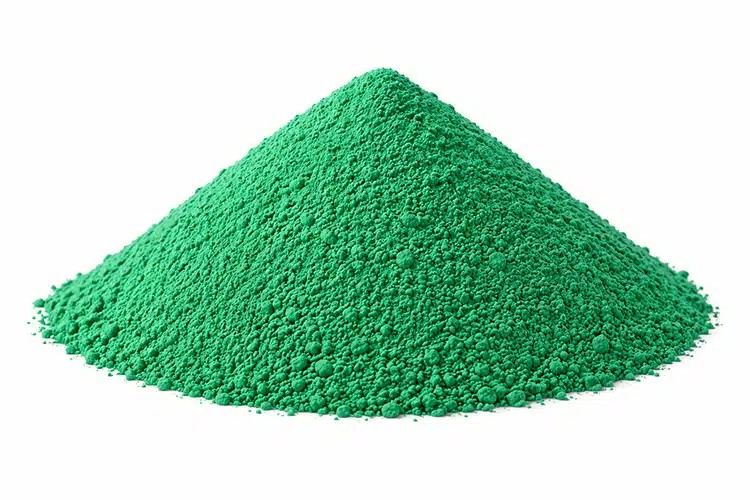
Copper carbonate is a fine, green powder used across various industrial and agricultural applications. It is mildly toxic, reactive with acids, and thermally decomposes to form copper oxide and carbon dioxide. The material is cohesive and tends to form dust, requiring careful handling and containment. KWS designs engineered systems that ensure safe, efficient conveying and minimize exposure risks.
Overview
Chemical Formula
Common Names
Common Forms
Applications
- Pigment production for ceramics, paints, and glass
- Catalyst and reagent in chemical processing
- Agricultural fungicides and micronutrient supplements
- Precursor for copper oxide and other copper compounds
Material Characteristics
| Property | Value / Description |
|---|---|
| Common Forms | Powder Or Fine Crystalline Solid |
| Bulk Density | 50–90 lb/ft³ (depends on purity and moisture content) |
| Flow Behavior | Cohesive; may pack or cake during storage |
| Abrasiveness | Low to Moderate minimal wear on equipment surfaces |
| Corrosiveness | Moderate Slightly corrosive when moist due to acidic or basic reactions |
| Dust Potential | High fine particles easily become airborne and may pose inhalation hazards |
Handling Challenges
- Dust generation requiring sealed conveying and dust collection systems
- Caking and packing during storage or conveying
- Potential corrosion from reaction with moisture or acidic vapors
- Segregation or loss of material in pneumatic conveying
- Worker exposure risk from inhalable copper dust
Summary
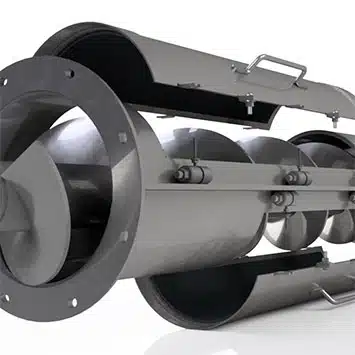
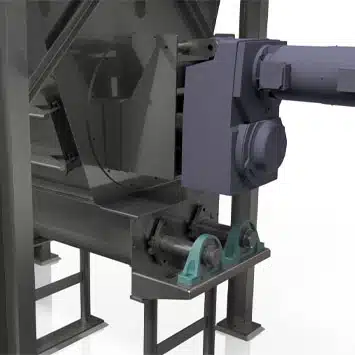
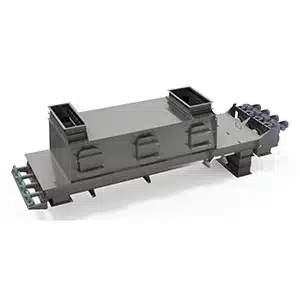
Copper carbonate is a cohesive and dusty bulk material that requires sealed, corrosion-resistant conveying equipment. KWS Manufacturing provides engineered solutions including screw conveyors, tubular drag conveyors, and metering feeders designed for consistent flow, containment, and operator safety.
With experience in handling fine chemical powders, KWS ensures reliable, clean, and low-maintenance performance in copper carbonate processing systems.