Asphalt
Bitumen · Asphalt Cement · Hot Mix Asphalt · Asphalt Binder
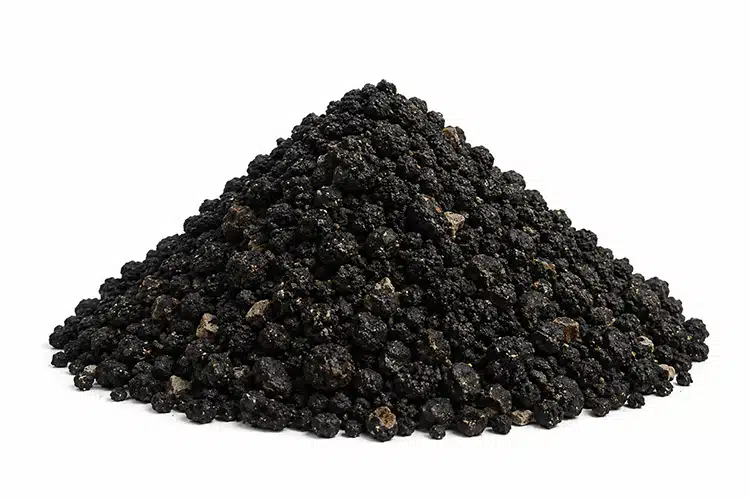
Asphalt is a dark, viscous, hydrocarbon-based material obtained from petroleum refining or natural deposits. It is used primarily as a binder in paving and roofing applications. In its hot form, asphalt behaves as a sticky liquid that solidifies upon cooling, while cold or solidified asphalt is dense and semi-brittle. KWS designs conveying systems capable of handling both hot and cooled asphalt safely, focusing on thermal control, stick resistance, and durability.
Overview
Chemical Formula
Common Names
Common Forms
Applications
- Road construction and paving materials
- Roofing and waterproofing products
- Industrial coatings and adhesives
- Asphalt emulsions and sealants
Material Characteristics
| Property | Value / Description |
|---|---|
| Common Forms | Hot Liquid Asphalt, Cooled Chunks, Granules, Pellets |
| Bulk Density | 65–85 lb/ft³ (depends on temperature and formulation) |
| Flow Behavior | Viscous and sticky when hot; brittle and dense when cooled |
| Abrasiveness | Low minimal mechanical wear, but high adhesion |
| Corrosiveness | Low chemically stable, but may retain residual acids |
| Dust Potential | Low solid asphalt is not dusty; fumes possible when hot |
Handling Challenges
- Stickiness and buildup in conveyors when material cools
- Thermal management to prevent solidification or melting
- Odor and fume control in hot asphalt applications
- Equipment wear from temperature cycling and adhesion
- Cleaning and maintenance difficulties due to material residue
Summary
Asphalt requires conveying and handling systems designed for temperature control, adhesion resistance, and durability. KWS Manufacturing provides engineered conveying solutions—including heat-jacketed screw conveyors, drag conveyors, and feeders—that ensure reliable material flow and easy cleanup in asphalt production environments.
With proven experience handling sticky and thermally sensitive materials, KWS ensures efficient, safe, and low-maintenance operation for asphalt conveying systems.