
Screw Conveyor vs. Screw Feeder
Screw conveyor and screw feeders operate quite differently. A screw conveyor is control-fed by another piece of equipment, in most cases, another screw conveyor, belt conveyor or rotary air lock. Material flow into a screw conveyor is constant. A screw feeder is flood-loaded in the inlet area and meters material from a hopper, bin, or silo, providing a steady, controlled flow to downstream equipment.
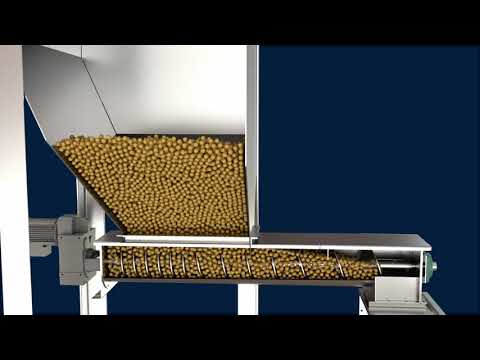
Video Transcript
What’s the difference between a screw conveyor and a screw feeder? The term “screw conveyor” is often used for either, although they operate quite differently.
A screw conveyor is control-fed by another piece of equipment, in most cases, another screw conveyor, belt conveyor or rotary air lock. Material flow is metered and typically constant. Flighting for a screw conveyor is full pitch which means the distance between flights matches screw diameter. Varying the speed of a screw conveyor increases or decreases trough loading but does not vary the amount of material being conveyed.
A screw feeder is flood-loaded or 100% full in the inlet area. A screw feeder meters material from a hopper, bin or silo, providing a steady, controlled flow to downstream equipment. Screw feeders use varying pitch flighting in the inlet area to pull evenly from storage device. Past the inlet area, the flighting opens to full pitch, decreasing trough loading, and allowing bulk materials to meter through the discharge efficiently. Feeders are generally shorter than conveyors and will rarely use hanger bearings. Unlike a screw conveyor, varying the speed of a screw feeder will actually increase or decrease the amount of material being conveyed.