
Portland Cement
Portland Cement · Hydraulic Cement · OPC (Ordinary Portland Cement)
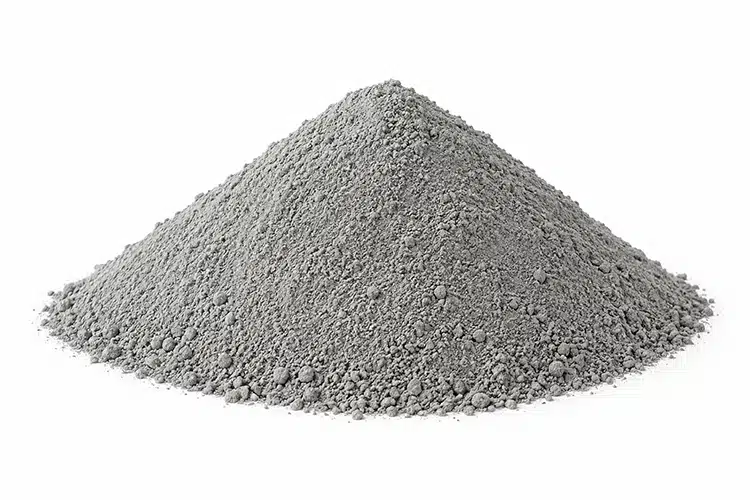
Portland cement is a fine, gray powder composed primarily of calcium silicates, aluminates, and sulfates. It is a key ingredient in concrete, reacting chemically with water to form a hard, durable mass. The material is highly cohesive, abrasive, and aeratable, posing challenges in conveying, storage, and dust control. KWS designs robust, dust-tight conveying systems with abrasion-resistant components to ensure efficient and reliable handling of cement.
Overview
Chemical Formula
Common Names
Common Forms
Applications
- Concrete and mortar production
- Grouting and soil stabilization
- Precast and structural construction materials
- Industrial chemical processes and fillers
Material Characteristics
| Property | Value / Description |
|---|---|
| Common Forms | Fine Powder |
| Bulk Density | 70–95 lb/ft³ (depends on fineness and aeration) |
| Flow Behavior | Cohesive, aeratable, and fluidizable; prone to flushing |
| Abrasiveness | High contains hard mineral particles |
| Corrosiveness | Low Slightly corrosive when in contact with moisture |
| Dust Potential | High fine airborne particles require containment and filtration |
Handling Challenges
- Severe dusting requiring enclosed systems and filtration
- Abrasive wear on screws, troughs, and chutes
- Flood-feeding and inconsistent discharge due to aeration
- Caking and buildup when exposed to moisture
- Environmental and worker safety concerns from fine dust exposure
Summary
Portland cement requires conveying and storage systems designed for fine, abrasive, and aeratable powders. KWS Manufacturing provides engineered solutions—including screw conveyors, drag conveyors, and dust-tight feeders—that ensure controlled flow, minimize dust, and resist abrasion.
With decades of experience handling cement and mineral powders, KWS ensures reliable, efficient, and safe operation in cement production and distribution facilities.