Coffee Beans
Green Coffee · Roasted Coffee Beans · Whole Bean Coffee
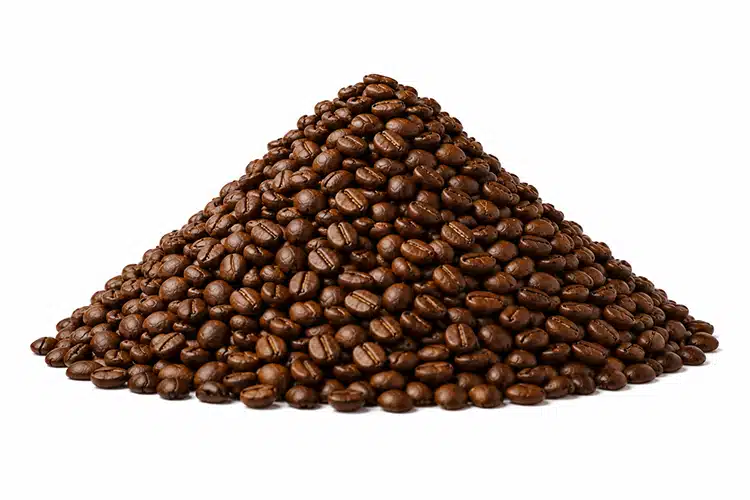
Coffee beans are the seeds of the Coffea plant, typically processed, dried, and roasted for beverage production. They are handled in both raw (green) and roasted forms, each with unique flow and fragility characteristics. Green beans are dense and durable, while roasted beans are lightweight, brittle, and prone to breakage. KWS designs conveying systems that ensure gentle handling, maintain bean integrity, and meet food-grade standards.
Overview
Chemical Formula
Common Names
Common Forms
Applications
- Coffee roasting and processing
- Food and beverage production
- Flavoring extracts and aroma manufacturing
- Composting and biomass fuel
Material Characteristics
| Property | Value / Description |
|---|---|
| Common Forms | Whole Green Beans, Roasted Beans, Ground Coffee |
| Bulk Density | 35–45 lb/ft³ (green beans); 20–25 lb/ft³ (roasted beans) |
| Flow Behavior | Free-flowing but sensitive to breakage and segregation |
| Abrasiveness | Low minimal wear on equipment surfaces |
| Corrosiveness | Not Corrosive but hygroscopic when stored long-term |
| Dust Potential | Moderate fine dust from roasted or ground coffee requires collection |
Handling Challenges
- Bean breakage from excessive mechanical handling
- Segregation of sizes during conveying or storage
- Dust generation from roasted or ground coffee
- Moisture absorption affecting flow and freshness
- Sanitation and contamination control in food-grade systems
Summary
Coffee beans require conveying and storage systems designed for gentle handling, dust control, and sanitation. KWS Manufacturing provides engineered solutions—including screw conveyors, belt conveyors, and bucket elevators—to ensure consistent material flow and product integrity.
With extensive experience in food and agricultural handling applications, KWS ensures efficient, hygienic, and reliable operation for coffee bean conveying systems.