Biochar
CₓHᵧO_z variable · Charcoal · Pyrolyzed Biomass · Carbonized Biomass
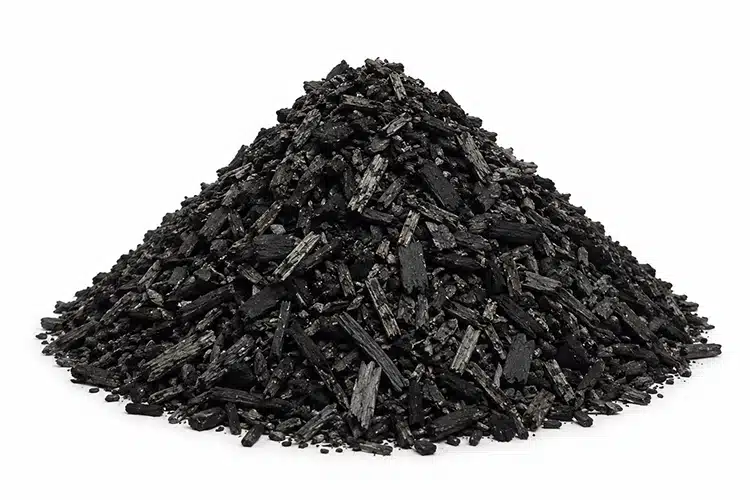
Biochar is a stable, carbon-rich material produced through the thermal decomposition of organic matter in a low-oxygen environment. It has a porous structure and large surface area, making it beneficial for soil improvement and environmental remediation. However, its lightweight, dusty, and variable particle size characteristics create challenges in conveying, feeding, and dust control. KWS designs robust handling equipment to manage biochar efficiently and safely.
Overview
Chemical Formula
Common Names
Common Forms
Applications
- Soil amendment and carbon sequestration
- Water and wastewater filtration media
- Livestock feed additive
- Energy and gasification feedstock
Material Characteristics
| Property | Value / Description |
|---|---|
| Common Forms | Crushed Biochar, Pelletized Biochar, Powdered Biochar |
| Bulk Density | 8–20 lb/ft³ (depends on source material and particle size) |
| Flow Behavior | Light, aeratable, and prone to flushing or flooding |
| Abrasiveness | Low minimal wear on contact surfaces |
| Corrosiveness | Not Corrosive |
| Dust Potential | High fine carbon dust can be explosive and difficult to contain |
Handling Challenges
- Extreme dust generation requiring containment and filtration
- Flood-feeding and uncontrolled discharge due to aeration
- Segregation and inconsistent flow in bins and conveyors
- Fire and explosion risk from carbon dust accumulation
- Difficulty in metering lightweight, variable material
Summary
Biochar presents unique handling challenges due to its low density, high dustiness, and combustible nature. KWS Manufacturing provides specialized conveying and feeding equipment—such as enclosed screw conveyors, mass flow hoppers, and live bottom bins—to ensure safe, consistent, and dust-free material flow.
With extensive experience handling lightweight carbonaceous materials, KWS ensures efficient, reliable, and safe operation for biochar handling systems.