
Alfalfa
(C₆H₁₀O₅)n · Lucerne · Alfalfa Hay · Dehydrated Alfalfa · Alfalfa Pellets
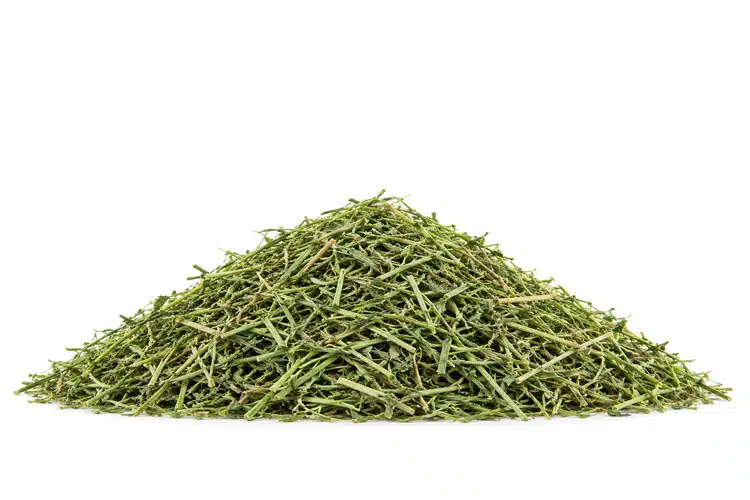
Alfalfa is a high-protein forage crop commonly dried, chopped, or pelleted for animal feed and agricultural use. It is lightweight, fibrous, and compressible, making it difficult to handle in bulk systems. The material’s variable moisture and density can cause bridging, dusting, and inconsistent feeding. KWS designs conveying and feeding equipment that handles alfalfa efficiently while minimizing degradation and dust emissions.
Overview
Chemical Formula
Common Names
Common Forms
Applications
- Animal feed and livestock nutrition
- Pelletized feed and supplement production
- Composting and soil enrichment
- Biomass energy and bioproduct feedstock
Material Characteristics
| Property | Value / Description |
|---|---|
| Common Forms | Chopped Alfalfa, Meal, Pellets |
| Bulk Density | 10-20 lb/ft³ (varies with moisture and compaction) |
| Flow Behavior | Poorly flowing; fibrous and prone to interlocking |
| Abrasiveness | Low Minimal wear on equipment surfaces |
| Corrosiveness | Not Corrosive |
| Dust Potential | Moderate to High Fine fibers may become airborne |
Handling Challenges
- Bridging and ratholing in hoppers and bins
- Inconsistent feed rates due to variable moisture and density
- Material degradation and fines generation during conveying
- Dust generation creating explosion or safety hazards
- Matting and buildup in screw conveyors or chutes
Summary
Alfalfa requires bulk handling systems designed for fibrous, compressible materials that are difficult to flow. KWS Manufacturing provides engineered conveying and storage solutions—including shaftless screw conveyors, live bottom bins, and drag conveyors—to promote consistent flow, reduce dust, and minimize maintenance.
With extensive experience in agricultural and biomass handling applications, KWS ensures reliable, efficient, and long-lasting performance for alfalfa conveying systems.