
The Importance of Coupling Bolts in a Screw Conveyor
Coupling bolts connect screw sections to shafts and are engineered specifically for the screw conveyor industry. Selecting the correct bolt for your application is critical to long term operation.
Video Transcript
What is the Purpose of Coupling Bolts in a Screw Conveyor?
Screw conveyors transport bulk materials from Point A to Point B. With each revolution of the screw, bulk materials are moved toward the discharge. A drive unit is located on one end to power and rotate the screw.
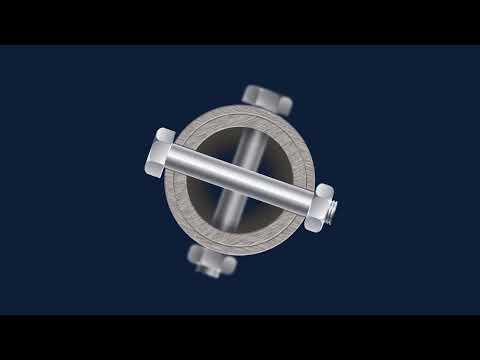
When a screw conveyor is under load, torque is generated by the drive unit and transferred to the drive shaft and corresponding screw sections. The drive unit and coupling shafts are connected to the screw sections using a CEMA standard design that utilizes coupling bolts. Coupling bolts are inserted through the screw section and coupling shafts, locking them together.
Drive unit torque turns the screw sections and is resisted by the coupling bolts, which are in
shear. Coupling bolts are designed to handle the full-motor torque of the drive unit and will not shear.
Coupling bolts have a special shank length equal to the outside diameter of the pipe, providing maximum shear area and strength. Having threads in the shear area causes premature failure of the bolt or shaft. Most coupling bolts are high strength, such as Grade 5 or Grade 8.
KWS stocks coupling bolts in both Grade 5 high strength steel and stainless steel for almost every application.